International Women's Day: An Interview with Karine Javelle from Terumo BCT
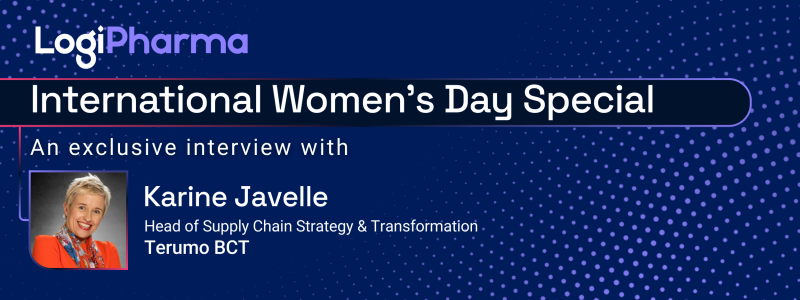
To mark International Women’s Day, Karine Javelle, Head of Supply Chain Strategy & Transformation at Terumo BCT, shares a candid reflection on the experiences that have defined her leadership journey. She speaks about the bold risks that propelled her forward, the lessons that shaped her along the way, and her unwavering commitment to creating more inclusive, empowering workplaces. Karine also emphasises why attracting, developing, and retaining more women in life sciences supply chains is not just important but essential to the sector’s future success.
Can you tell us about your career journey so far? What first drew you to the supply chain and life sciences industry, and how did you progress to your current role?
I am passionate about Supply Chain! Was it meant to be this way? When I began my career over 20 years ago, I had studied Finance in France and an MBA the US to find my first role in Supply Chain in Germany!
Over time, I realized that supply chain sits at the intersection of strategy and execution — it is where decisions directly translate into impact. I’ve always been fascinated by its complexity — how planning, logistics, manufacturing, and commercial decisions all connect.
Then later in 2001 when I moved to Zurich, I discovered something even more meaningful: in life sciences, supply chain is not just about efficiency — it is about patients and saving lives.
I started in continuous improvement roles, driving Six Sigma and Lean transformations. Over time, I led network optimization initiatives, worked on major divestitures, separations and integrations, and progressively took on broader leadership mandates. Leading EMEA Planning, and later Fulfilment.
More recently, I built and scaled a global supply chain organization during a major spin-off — aligning planning, logistics, and trade under one unified governance model while ensuring zero disruption to patient supply.
Finally, I am now focusing on shaping strategies and transformation
Each step built not just expertise — but resilience, perspective, and purpose.
Looking back, were there any defining moments, challenges, or opportunities that had a significant impact on your career path or leadership style?
Yes — and many of them came during times of uncertainty. Leading large-scale divestitures and integrations taught me that transformation is not only about structure and process — it is about people. When teams are navigating change, clarity and empathy matter as much as strategy.
Another defining moment was leading through crisis while safeguarding patient supply. It reinforced my belief that leadership is about staying calm under pressure and making decisions that protect both performance and people.
Building a new global organization during a spin-off was particularly meaningful. Designing a new strategy, a new governance, selecting leaders and helping them to build their teams, and creating a culture from the ground up required trust, empowerment, and courage. It shaped my leadership philosophy: transformation succeeds when people feel ownership and inclusion.
As a leader, how do you foster a positive and inclusive work culture within your teams?
In global supply chains, I always considered diversity as a strength. My teams span regions, cultures, and languages. I think looking back I focused on three main principles:
Connecting everyone to our shared mission of serving patients.
Empowerment – Equipping teams with the right tools, structure and processes so they feel confident.
Visibility and sponsorship – Ensuring emerging leaders are seen, heard, and considered for stretch opportunities. Recognizing their successes. They need to be successful for yourself to be successful.
Inclusion is not just representation — it is creating environments where people feel psychologically safe to challenge, innovate, and grow.
In regards to inspiring women to step into the wonderful world of Supply Chain/Logistics, why is this important to you personally, and how is this a regular part of your day-to-day role?
Supply chain has historically been male-dominated. Is this because warehousing and transportation are not very attractive to females? Is it because a lot of the supply chain professionals have an engineering background (although I studied finance!)? Yet it is one of the most strategic and impactful functions in any organization.
Representation matters. Early in my career, there were few female and male role models in global leadership. I felt a responsibility to be visible — to show that women can lead large, complex, global supply chain organizations and thrive.
In my recent roles, this translated in actively sponsoring female talent for leadership roles, building diverse succession pipelines, and advocating for inclusive leadership within industry forums.
Inspiring women in supply chain is not about symbolic gestures — it is about building sustainable, diverse leadership for the future.
From your perspective, how is work culture changing across supply chain and logistics, and what progress are you most encouraged by, especially for women in the industry?
Supply chain has evolved from a transactional function to a strategic powerhouse.
Digital tools, advanced analytics, and AI will elevate supply chain into executive conversations. We should be moving from proving capability to shaping the future.
For women who are earlier in their careers or aspiring to leadership roles in supply chain, what advice would you share based on your own experience?
On International Women’s Day, my message is simple: Own your ambition. That’s also what I tell my 2 daughters!
Build technical depth — credibility matters.
Seek cross-functional exposure — supply chain connects everything.
Volunteer for transformation projects — they accelerate growth.
Find mentors and sponsors — that helps.
And do not wait to be invited into leadership conversations — step into them.
Supply chain is one of the most purpose-driven careers available I have experienced in my career. It combines analytics, strategy, crisis management, innovation, and human leadership — all while making a tangible difference in people’s lives.
And we need more women shaping its future.
LogiPharma are thrilled to announce that Karine will be speaking at the 2026 conference - register today to hear her insights.